
FAQs
What industries do you serve?
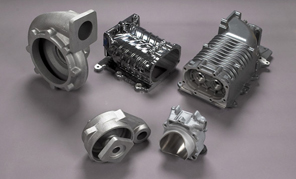
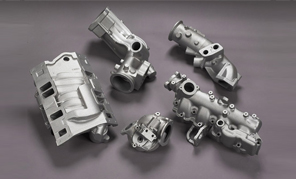
We support customers who need consistent, production-ready aluminum castings—especially where pressure integrity, repeatability, and dimensional stability matter. Common industries include:
- Automotive & Transportation (powertrain, chassis, thermal management, electrification components)
- Pump & Valve (housings, covers, impellers, manifolds)
- Fueling & Fluid Handling (fuel system components, regulator bodies, manifolds)
- Industrial Equipment & Machinery (gearbox housings, brackets, structural components)
- Off-Highway / Agriculture / Construction (hydraulics housings, structural castings)
- Aerospace & Defense (select applications) (non-flight-critical hardware; program-dependent)
- Medical & Laboratory Equipment (enclosures, structural and fluid-handling castings)
- Energy & Power (components for power generation, compressors, and balance-of-plant)
- Consumer & Commercial Products (where durability and cosmetic/finish requirements apply)
If your application isn’t listed, send a model/drawing—most castings fit based on geometry, alloy, quality requirements, and volume.
How do you ensure quality and consistency?
Quality is engineered into the process—starting with part review and continuing through controlled production and verification. Typical controls include:
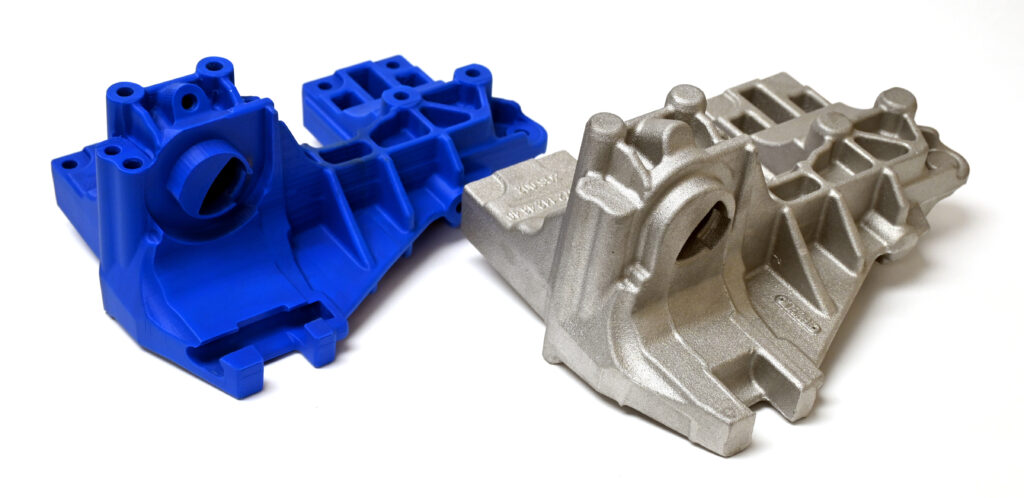
- Up-front engineering review (DFM)
- Identify leak/porosity risk features early (thin walls, isolated masses, heavy transitions, long feed paths)
- Recommend practical design tweaks (radii, wall transitions, coring strategy, machining stock, datum strategy)
- Confirm what should be cast vs. machined for function and cost
- Process controls that drive repeatability
- Standardized work instructions and controlled parameters
- Defined sampling plans and in-process checks to catch drift before it becomes scrap
- Traceability and lot control aligned to customer requirements
- Inspection and verification
- Dimensional inspection
- Visual standards and defect criteria aligned to customer expectations
- Mechanical property verification (tensile/hardness) when required
- Leak testing and/or pressure validation when specified
- X-ray/CT via qualified methods where required
- Quality systems
- Formal quality management system: ISO and IATF certified
- APQP/PPAP support for launches, including control plans, PFMEA inputs, and defined control strategy
How do you use simulation to drive sound, porosity-resistant castings?
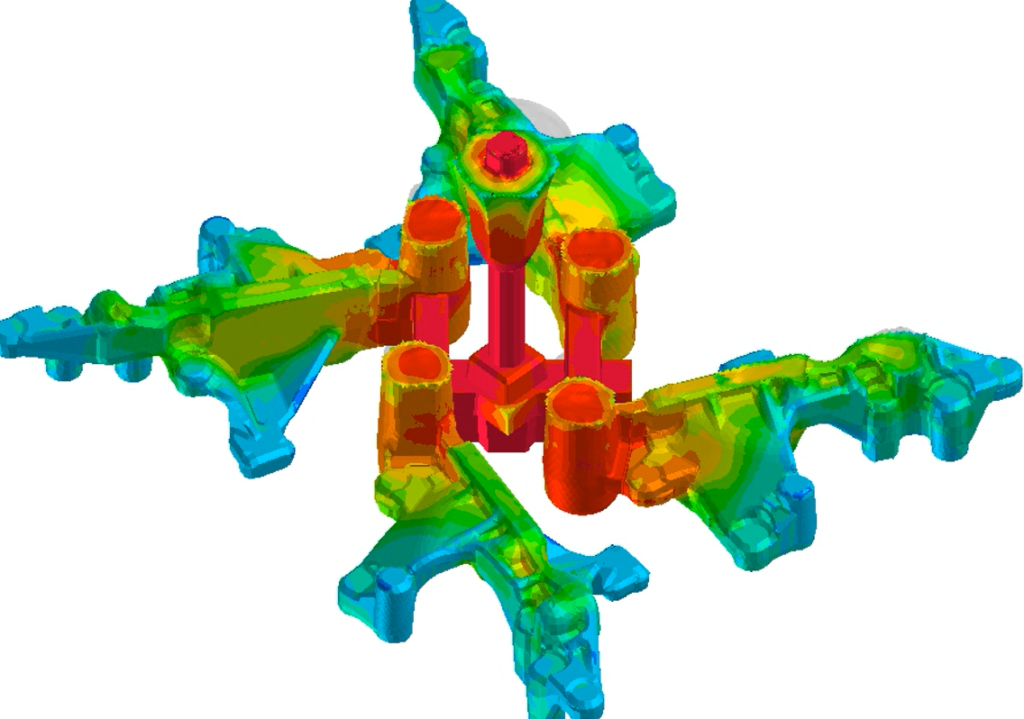
Simulation is one of the fastest ways to reduce risk before metal is poured—especially for thin-wall or leak-critical castings. We use simulation and engineering analysis to:
- Predict fill behavior
- Identify turbulence risk, air entrapment, cold shuts, and misrun potential
- Improve gating/runner design for stable, repeatable fills
- Predict solidification and feeding
- Map hot spots, isolated masses, and shrink risk areas
- Optimize risers/feeding paths (or process settings) to reduce shrink-related porosity
- Improve yield and stability
- Reduce trial-and-error iterations
- Shorten launch timelines by arriving at a stable process sooner
- Provide clearer, earlier feedback on what geometry is likely to be leak-sensitive
The result: a more predictable launch, fewer surprises, and a casting design/process combination aimed at sound, pressure-capable performance—not just “meeting print” once.
Can you produce porosity-free castings?
In practice, “porosity-free” depends on the definition and the requirement (structural vs. cosmetic vs. pressure-tight). What we can do is engineer the casting and process to minimize porosity risk and consistently meet your acceptance criteria by:
- Designing to avoid known leak-risk features where possible
- Using simulation to validate fill/solidification strategy
- Controlling melt handling and pouring practice
- Implementing targeted inspection
- Aligning on clear acceptance criteria and inspection zones early in the program
If you have a leak spec or radiographic standard, share it up front—then we can design the control plan around what matters most.